Guide

How to calculate customer acquisition cost by channel

Vincent Ruan
Vincent RuanFounder, Attrifast ·

Your average CAC is a vanity metric. It hides the fact that some channels bring you customers for $50 while others cost $1,200 each. This guide shows you how to calculate CAC per marketing channel, includes 2026 benchmarks by industry, and explains why most founders get this number wrong — and what to do about it.

Updated March 2026 · 12 min read
TL;DR
  • Blended CAC hides that some channels cost $50/customer while others cost $1,200 — always calculate per channel.
  • Formula: Channel CAC = Total Channel Spend (including your time) / New Paying Customers from That Channel.
  • 2026 benchmarks: SaaS paid search CAC is $400-$900, organic is $200-$940, referrals are $50-$200.
  • Most founders undercount costs (ignoring their own time) and overcount customers (counting trials as conversions).

Why blended CAC is misleading

Most founders know their blended CAC: total marketing spend divided by total new customers. It's a clean number. It fits in a pitch deck. And it's almost useless for making marketing decisions.

Blended CAC treats every channel as equally efficient. It cannot tell you that your $3,000/month Google Ads budget produces customers at $375 each while your $200/month newsletter produces them at $40 each. It cannot tell you that organic search — which looks "free" — actually costs $600 per customer when you account for the 20 hours a month you spend writing content.

What blended CAC shows
$287
Average cost per customer
$8,600 spend / 30 customers

Looks reasonable. But which channels should you scale? Which should you cut? No way to tell.

What channel-level CAC reveals
  • Referrals$42
  • Newsletter$67
  • Organic search$310
  • Google Ads$375
  • LinkedIn Ads$890

Now you know: scale referrals and newsletter, optimize Google Ads, and question LinkedIn entirely.

The formula for CAC by channel

The formula itself is simple. The hard part is getting accurate inputs — especially the "customers from this channel" number.

Channel CAC Formula
Channel CAC = Total Channel Spend / New Paying Customers from Channel

Include all costs: ad spend, tools, freelancers, and your time. Count only paying customers, not trials or signups.

Step-by-step calculation

1

List every marketing channel you use

Start with the channels that generate traffic: organic search, paid search, paid social, email, referral, direct, content syndication, partnerships. If you run ads on multiple platforms, treat each as a separate channel.

2

Calculate total spend per channel

Include all costs: ad spend, tool subscriptions, freelancer fees, and a fair allocation of your own time. If you spend 10 hours a month writing SEO content and value your time at $100/hr, your organic channel costs $1,000/month — not $0.

3

Count new paying customers per channel

This is where most founders get stuck. You need to know which channel each paying customer came from. Without attribution data connecting traffic sources to payments, this number is a guess.

4

Divide spend by customers

Channel CAC = Total Channel Spend / New Paying Customers from That Channel. A $2,000 Google Ads spend that produces 8 paying customers means a $250 paid search CAC.

5

Compare against channel LTV

A $250 CAC is meaningless without context. If customers from paid search have a $1,500 LTV, the 6:1 ratio is excellent. If they churn after one month at $29, you are losing $221 per customer.

What costs to include (and what to exclude)

Include
  • Ad spend (all platforms)
  • Tool subscriptions (SEO tools, email platforms)
  • Freelancer/agency fees
  • Your time at a fair hourly rate
  • Content creation costs (writers, designers)
Exclude
  • Product development costs
  • Customer support costs (post-sale)
  • General SaaS infrastructure
  • One-time brand/design projects

The hard part: knowing which channel each customer came from

Calculating the "spend" side of the formula is straightforward. The "customers from this channel" side is where most CAC calculations break down. The problem is that your analytics tool and your payment processor don't talk to each other.

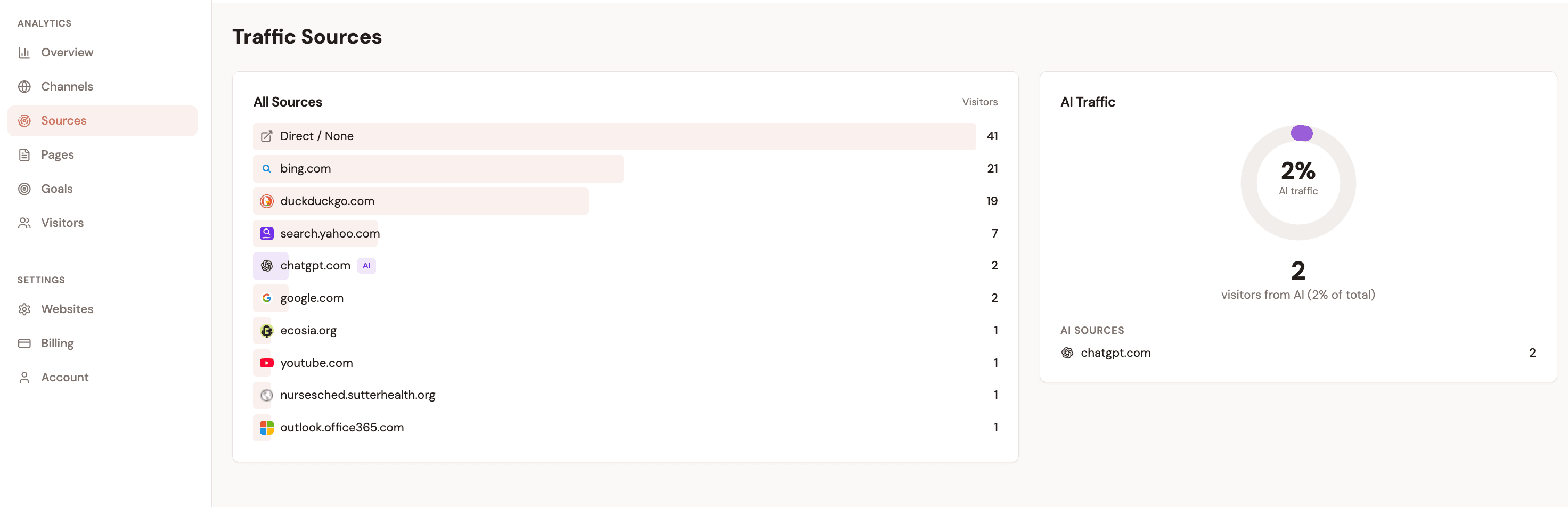
Google Analytics knows traffic sources. Stripe knows who paid. Neither tool knows which traffic source led to which payment. This is the attribution gap — and it makes accurate channel-level CAC impossible without additional tooling.

Cookie expiration and ad blockers

Safari deletes first-party cookies after 7 days (source: webkit.org). 30-40% of visitors use ad blockers (source: backlinko.com). If a visitor clicks your Google Ad on Monday and pays on the following Thursday from a different device, GA4 cannot connect those events. The customer exists in Stripe but has no marketing source.

Server-side payments are invisible to browser tools

Stripe payments happen via webhooks — server-to-server communication with no browser involved. Subscription renewals, failed charge retries, and plan upgrades happen automatically. GA4, which runs in the browser, never sees these events.

UTM parameters alone are not enough

UTMs identify the channel at click time. But UTMs are lost when the visitor navigates away from the landing page, or when Stripe redirects to a different checkout domain. Without a persistent session mechanism, UTMs break at the payment step.

How Attrifast solves the attribution gap

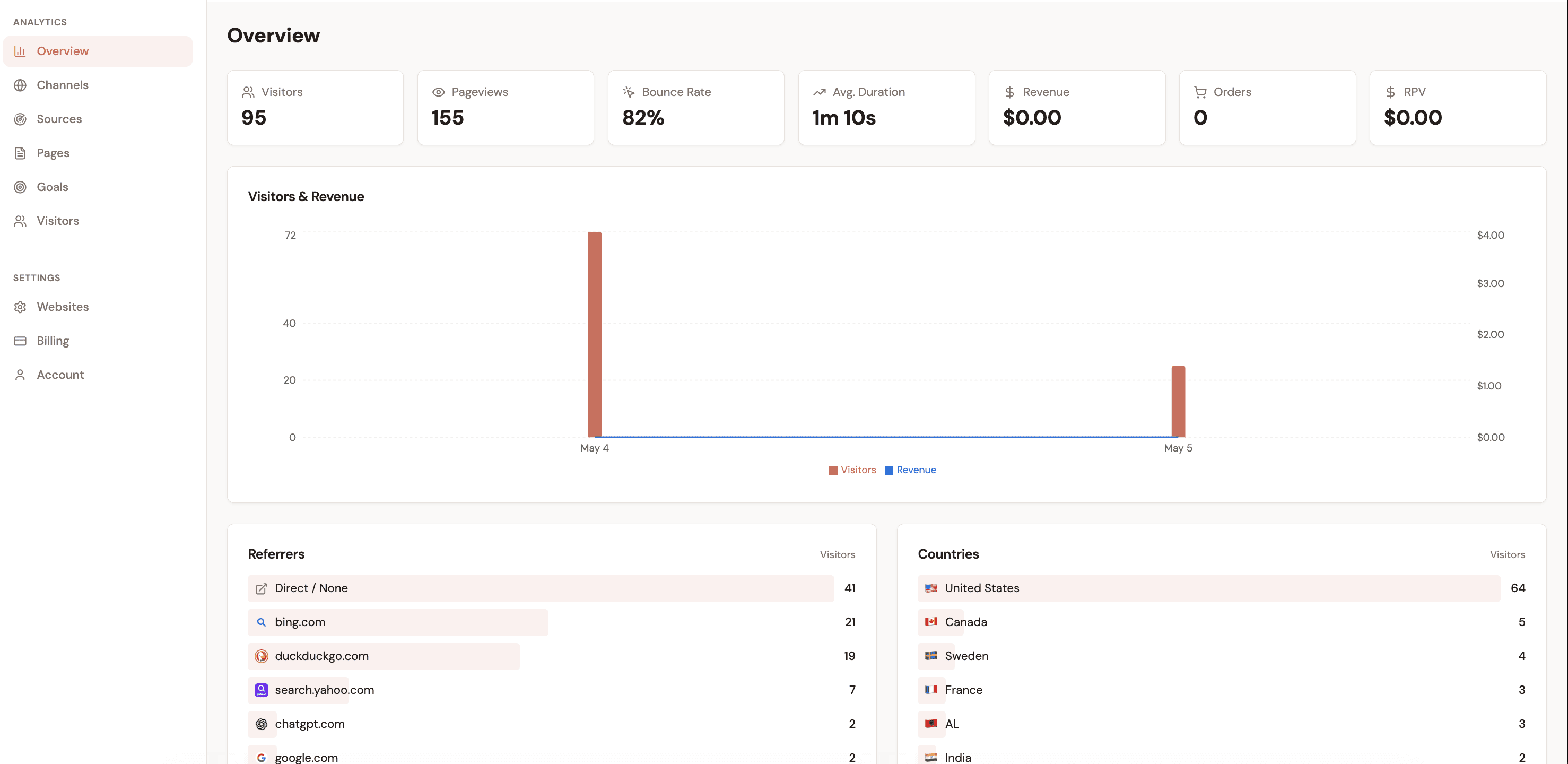
Attrifast uses a cookie-free tracking approach that persists across sessions without relying on browser cookies. When a visitor arrives, the script captures their traffic source. When that visitor later completes a Stripe payment, Attrifast matches the payment to the original session server-side. The result: accurate customer counts per channel — which is exactly the denominator you need for channel-level CAC.

CAC benchmarks by channel (2026)

These ranges are compiled from industry reports by First Page Sage, Phoenix Strategy Group, and ProfitWell. Use them as directional benchmarks — your actual numbers depend on product, pricing, and market.

Organic Search (SEO)
SaaS CAC

$200-$940

Ecommerce CAC

$80-$220

Payback

6-18 months

Trend

Stable

Content Marketing
SaaS CAC

$150-$560

Ecommerce CAC

$60-$180

Payback

6-12 months

Trend

Stable

Referral / Word of Mouth
SaaS CAC

$50-$200

Ecommerce CAC

$30-$120

Payback

1-3 months

Trend

Declining

Email Marketing
SaaS CAC

$120-$380

Ecommerce CAC

$50-$150

Payback

2-6 months

Trend

Stable

Paid Search (Google Ads)
SaaS CAC

$400-$900

Ecommerce CAC

$150-$400

Payback

1-6 months

Trend

Rising

Paid Social (Meta, LinkedIn)
SaaS CAC

$350-$800

Ecommerce CAC

$120-$350

Payback

1-4 months

Trend

Rising

LinkedIn Organic
SaaS CAC

$100-$350

Ecommerce CAC

N/A

Payback

3-9 months

Trend

Stable

Outbound (Cold Email)
SaaS CAC

$500-$2,000

Ecommerce CAC

N/A

Payback

1-3 months

Trend

Rising

Key insight

Between 2023 and 2026, paid channel CAC increased 40-60% across most industries [source] — driven by rising ad competition, privacy regulations reducing targeting accuracy, and attribution gaps causing wasted spend. Organic and referral channels remained stable or declined in cost, making them increasingly valuable relative to paid.

LTV:CAC ratio — the metric that tells you if a channel is profitable

A $500 CAC is not inherently bad. A $50 CAC is not inherently good. What matters is how CAC compares to the lifetime value (LTV) of customers from that channel. The LTV:CAC ratio gives you that comparison.

< 1:1Losing money

You are paying more to acquire customers than they generate in revenue. Unless you are in a deliberate growth-at-all-costs phase with investor funding, shut this channel down.

1:1 to 3:1Break-even to marginal

The channel covers its cost but leaves little margin for product, infrastructure, and profit. Optimize before scaling — there may be targeting or landing page improvements that push it higher.

3:1 to 5:1Healthy — scale this

The industry gold standard. Every $1 spent on this channel generates $3-5 in customer lifetime value. Double your investment here before spending another dollar on underperforming channels.

> 5:1Excellent — but are you under-investing?

An extremely high ratio often means you are not spending enough on this channel. There is likely room to increase spend and acquire more customers before efficiency drops. Test scaling.

Calculating LTV:CAC by channel requires two data points: the LTV of customers from each channel (which varies — referral customers often have higher LTV than paid customers) and the CAC for each channel. Most founders only calculate blended LTV and blended CAC, missing the most actionable insight: which channels bring the most valuable customers, not just the cheapest ones.

How to use channel CAC data to cut wasted spend

Once you have accurate CAC by channel, the optimization framework is straightforward. Most marketing budgets follow an 80/20 pattern: a small number of channels drive most of the value, while the rest consume budget with marginal returns.

1

Rank channels by LTV:CAC ratio

Sort your channels from highest to lowest LTV:CAC. This is your priority list. Channels at the top get more budget. Channels at the bottom get scrutiny.

2

Identify channels below 1:1

Any channel with a LTV:CAC below 1:1 is actively losing money. Pause spend immediately unless you have a specific hypothesis for how to fix it (better targeting, better landing page, different offer).

3

Test scaling your best channels

Increase spend on your highest LTV:CAC channels by 20-30% and monitor for 2-4 weeks. If the ratio holds, scale again. If it drops, you have found the channel's ceiling.

4

Run experiments on mid-tier channels

Channels in the 1:1 to 3:1 range are candidates for optimization, not elimination. Test new ad creatives, different targeting, or alternative landing pages. Use UTM-tagged experiments so you can measure the impact on channel-specific revenue.

5

Recalculate monthly

CAC is not static. Seasonal demand, competitor behavior, and algorithm changes move channel costs constantly. Recalculate every month and adjust allocation. Tools that provide real-time revenue attribution by channel make this step automatic.

5 common mistakes when calculating CAC by channel

Getting CAC wrong is worse than not calculating it at all — because a wrong number gives you false confidence to misallocate budget. These are the mistakes that show up most frequently in bootstrapped businesses.

Counting free trials as "customers"

A trial signup is not a customer. If you calculate CAC using trial counts, your numbers look great — until you realize 80% of those trials never convert. Use paying customers only.

Ignoring your own time as a cost

If you spend 15 hours a week on content marketing, that is a real cost. Founders who count only ad spend dramatically underestimate organic and content CAC, leading to over-investment in channels that seem "free" but are not.

Using blended CAC for budget decisions

Blended CAC ($12,000 spend / 40 customers = $300) hides the fact that referrals cost $50 each while outbound costs $1,200 each. Budget decisions based on blended CAC always misallocate money.

Forgetting time lag between click and purchase

A visitor who clicks a Google Ad in January and buys in March should count as a January paid search acquisition. Monthly CAC snapshots miss these lagged conversions, making slow-converting channels look worse than they are.

Using last-click attribution by default

If a customer first discovers you through a blog post (organic), then returns via a retargeting ad (paid social) to buy, last-click gives all credit to paid social. The blog post — which did the hard work of awareness — gets zero credit.

Key takeaways

1Blended CAC hides which channels are profitable and which are draining budget. Always calculate CAC at the channel level.
2The formula is simple (spend / customers), but the "customers from this channel" number requires attribution data that connects marketing traffic to actual payments.
3Referral and organic channels consistently have the lowest CAC, but are not free when you account for time investment.
4Paid channel CAC has risen 40-60% since 2023, making accurate channel-level tracking more important than ever.
5LTV:CAC by channel — not blended — is the single best metric for deciding where to invest and where to cut.
6Recalculate monthly. CAC is not static, and last month's best channel can become this month's worst.

Customer acquisition cost by channel — B2B SaaS benchmarks (USD)

Source: Phoenix Strategy Group 2025; First Page Sage 2025; Pavilion 2024 SaaS Benchmarks Report

Know your real CAC by channel

Connect Stripe and see which marketing channels bring paying customers — not just traffic. Setup takes 2 minutes.

Calculate real CAC →

Loved by 500+ users