Guide

First touch vs last touch attribution: a data-backed guide for small businesses

Vincent Ruan
Vincent RuanFounder, Attrifast ·

Multi-touch attribution sounds more sophisticated than single-touch models — but for businesses under 500 conversions a month, that sophistication is statistical noise. Here is the evidence for why first-touch attribution is the right default, and exactly when it is worth switching to something more complex.

Updated March 2026 · 9 min read
TL;DR
  • Under 500 conversions/month, first-touch attribution gives the clearest, most actionable signal.
  • Multi-touch models (linear, time-decay, data-driven) require large datasets to be statistically meaningful.
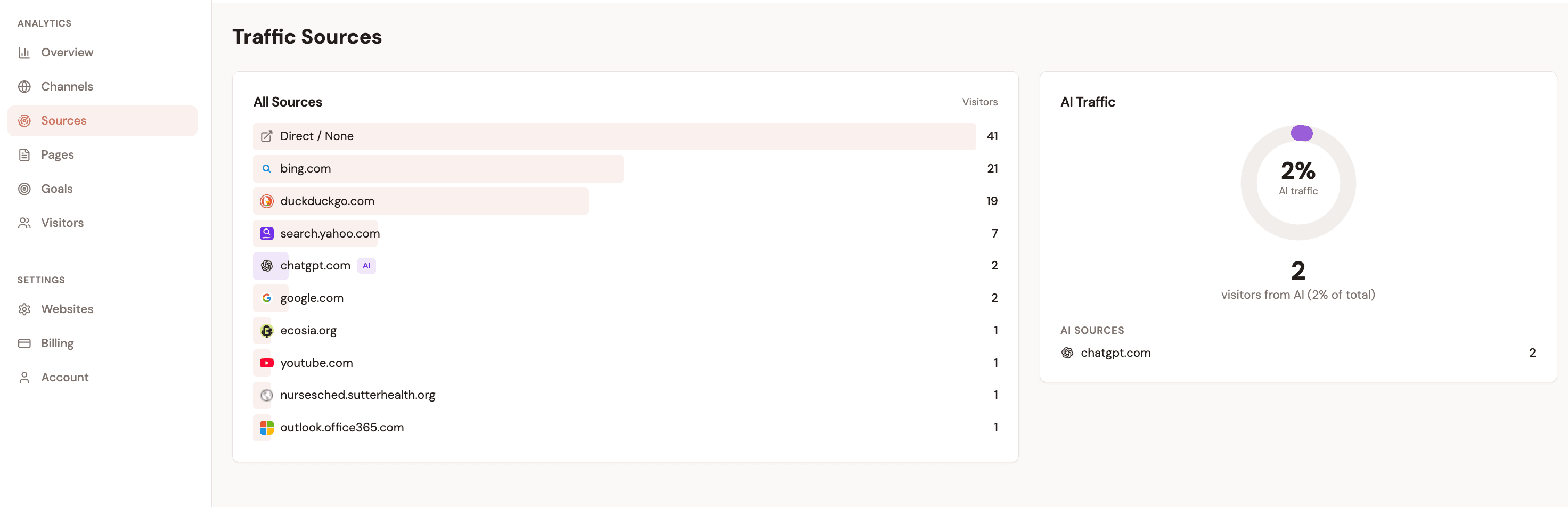
  • First-touch answers "where do paying customers discover me?" — the most important question for growth.
  • Switch to multi-touch only when you exceed 500 monthly conversions and run 5+ marketing channels.

Attribution models explained

Before comparing models, it helps to understand what each one actually measures. Every model asks the same question — which marketing touchpoint gets credit for a conversion? — but answers it differently.

First-touch attribution

100% of the credit goes to the very first interaction. If a visitor discovered you through Google Organic, that channel receives the full revenue credit regardless of what happened before they bought.

Best for answering: Where do paying customers first discover me?

Last-touch attribution

100% of the credit goes to the final interaction before purchase. The visitor clicked your newsletter and bought? Newsletter gets all the revenue credit.

Best for answering: Which channel closes the deal?

Linear attribution

Equal credit to every touchpoint in the journey. A 4-touch path gives each channel 25%. Fair in theory, but dilutes signal quickly — and requires enough conversions that the averages mean something.

Best for answering: Which channels participate most in the path to purchase?

Time-decay attribution

Touchpoints closer to conversion receive more credit. The final interaction gets the most; early touchpoints get a fraction. A compromise between first-touch and last-touch — but it demands large data volumes to produce stable numbers.

Best for answering: Which touchpoints matter most as purchase intent rises?

Data-driven / algorithmic attribution

Machine learning assigns credit based on statistical patterns across thousands of conversion paths. Google uses this in GA4. It is the most "accurate" model in theory — but it is a black box, and it requires massive data volumes before the model produces anything meaningful.

Best for answering: What does the true marginal contribution of each channel look like at scale?

Same sale, four different answers

A customer takes 11 days and four touchpoints to make a $120 purchase. Watch how each attribution model distributes that revenue differently — and consider which answer would actually change how you spend your marketing budget.

TouchpointFirstLastLinearTime-decay
Day 1Google OrganicDiscovers brand via blog post$120$30$12
Day 5Twitter / XEngages with a thread$30$20
Day 9Retargeting adClicks display ad$30$36
Day 11NewsletterClicks email, purchases $120$120$30$52

First-touch and last-touch both give you a single, unambiguous signal. Linear and time-decay spread credit across four channels — which sounds fairer, but only produces reliable channel rankings if you have enough conversions for the averages to stabilise. At low volumes, distributed credit is just distributed noise.

Statistical significance thresholds by attribution model

This is the evidence most attribution guides skip. Every model has a minimum data requirement — a conversion volume below which the model's output is statistically unreliable. The more touchpoints a model tries to weight, the more conversions it needs to produce stable, actionable numbers.

First-touch

Reliable for most small businesses

50conv/mo
Last-touch

Reliable for most small businesses

50conv/mo
Linear

Needs more data to distribute credit meaningfully

200conv/mo
Time-decay

Needs even more data for weighted distribution

500conv/mo
Data-driven / Algorithmic

Requires massive datasets — enterprise only

5,000conv/mo

Key insight

Under 500 conversions a month, multi-touch attribution is statistically noise. First-touch gives you the cleanest, most actionable signal at any volume — because it makes no attempt to distribute credit across touchpoints that you may not have enough data to rank reliably.

The recommendation: match model to volume

There is no single "best" attribution model in the abstract. There is only the model that produces reliable output at your current conversion volume. Here is a practical framework.

Under 500 conv/mo

Use first-touch attribution

First-touch tells you the most actionable thing at low volume: where paying customers first encountered your brand. That single data point is enough to make real budget decisions — double down on channels that introduce buyers, cut channels that only attract browsers.

500–2,000 conv/mo

Consider linear attribution

At this volume, distributing credit equally across touchpoints starts to produce stable averages. Linear attribution can help you understand which channels appear across many conversion paths — useful if you are running multiple channels simultaneously and want a fuller picture.

5,000+ conv/mo

Multi-touch and data-driven models

Above this threshold, time-decay and data-driven models begin producing statistically meaningful weightings. This is the territory of established DTC brands and enterprise marketing teams with dedicated analysts.

Why Attrifast uses first-touch by default

When we built Attrifast, we made a deliberate choice: first-touch attribution as the default. Not because multi-touch models are wrong, but because the businesses using Attrifast — bootstrapped founders, indie developers, small ecommerce stores — are almost never above the volume thresholds where multi-touch models add clarity.

First-touch also has a practical advantage: it answers the question that matters most for growth-stage businesses. You can optimise a channel that closes deals once you already have buyers in the funnel. But you cannot build a funnel if you do not know where buyers come from in the first place.

Clean signal at low volume

First-touch requires the fewest conversions to produce reliable rankings. A business with 80 sales a month can confidently identify its top acquisition channel.

No touchpoint tracking complexity

Multi-touch models require you to stitch together every session a visitor has ever had. First-touch only needs to capture the original source — simpler to implement, fewer failure points.

Directly actionable

Knowing Google Organic brought 70% of your paying customers is a budget decision waiting to happen. Knowing it contributed 23% of "weighted credit" in a linear model is a data exercise.

Works without cookies

Attrifast is cookie-free and privacy-friendly. First-touch attribution is robust in a cookieless environment — you capture source on the first visit and that is all you need.

Attribution model usage among B2B SaaS teams

Source: Composite of attribution-tool customer surveys 2024–2025; Adobe and Matomo published model-comparison data

First-touch attribution that works

See which channel first introduced your paying customers. No complex multi-touch models needed.

See your first-touch data →

Loved by 500+ users