Pillar Guide

Traffic attribution: the complete guide to tracking where customers come from

Vincent Ruan
Vincent RuanFounder, Attrifast ·

You spent $10,000 on marketing last month. $3,000 on Google Ads, $2,000 on Facebook, $1,500 on content, $2,000 on email, $1,500 on LinkedIn. Revenue went up 15%. But which channel drove that growth? This guide covers everything from attribution models to setup, channel strategies, and tool comparison — so you can stop guessing and start allocating budget based on evidence.

Published March 2026 · 22 min read
TL;DR
  • Traffic analytics shows where visitors come from. Attribution shows which visitors become paying customers.
  • Under 500 monthly conversions? Use first-touch attribution. Add complexity only when data volume earns it.
  • Cookie-based tools now capture only 50-70% of traffic. Server-side attribution is the durable fix.
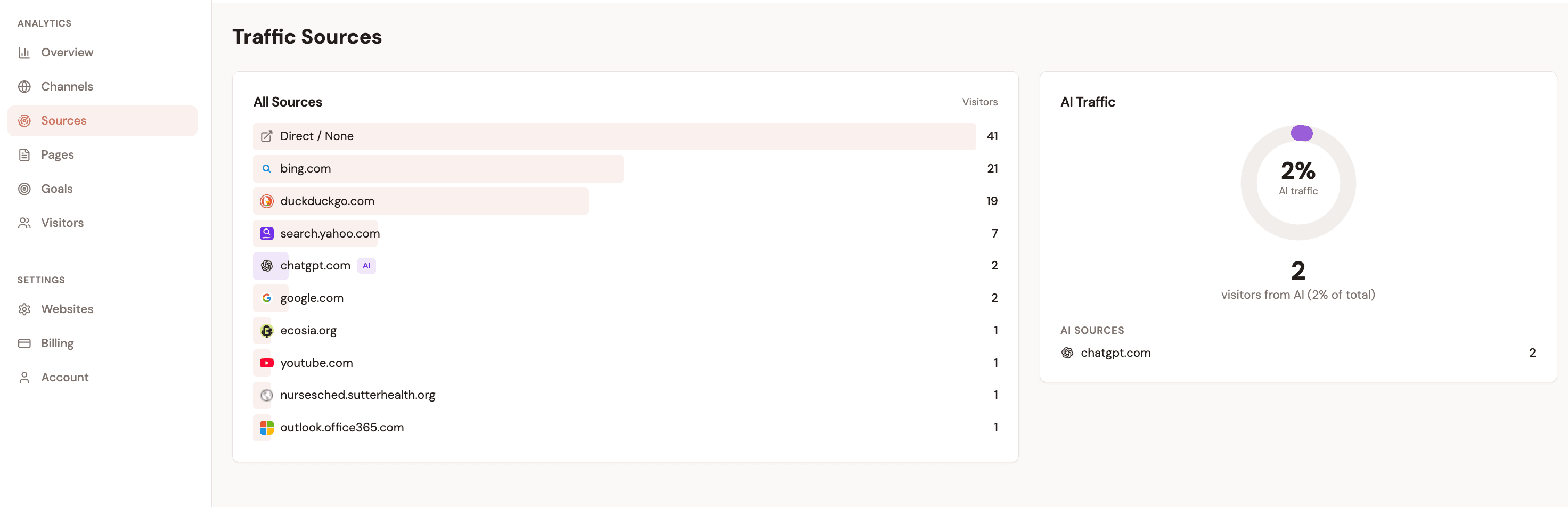
  • AI traffic (ChatGPT, Perplexity, Claude) is growing 200%+ YoY — and most tools misclassify it as "Direct."
  • Companies implementing attribution report 15-30% improvement in marketing ROI from better budget allocation.

What is traffic attribution?

Traffic attribution is the process of identifying which marketing channels, campaigns, and touchpoints deserve credit for a conversion. A conversion is any action that matters to your business: a purchase, a paid subscription, a free trial signup, a demo request, or a qualified lead form submission.

Think of it like figuring out which player on a basketball team deserves credit for winning the game. The scorer gets the obvious credit. But what about the player who set the screen? The point guard who drew the defender away? The coach who called the play? Attribution is the discipline of deciding how to distribute credit across all contributing causes.

Why attribution is technically difficult

A customer's path to purchase rarely follows a straight line. A prospective buyer might see your LinkedIn ad on Monday, read a blog post via Google on Thursday, click a Facebook retargeting ad the following Friday, visit your site directly over the weekend, and click an email link two weeks later to purchase. Five touchpoints across five channels, spread over twenty days, likely across multiple devices. The data lives in different systems that don't talk to each other by default.

Traffic analytics shows
  • Sessions and pageviews by channel
  • Bounce rate and time on site
  • Which pages get the most views
  • Traffic trends over time

Useful for site optimization. Misleading for budget decisions.

Traffic attribution shows
  • Paying customers by channel
  • Revenue per visitor (RPV) per source
  • Customer acquisition cost per channel
  • ROAS and payback period per source

The data you need to decide where to invest and where to cut.

The business impact

Companies implementing attribution models report 15-30% improvement in marketing ROI within twelve months, primarily by reallocating budget from channels that look good in last-click reports but underperform in full-funnel analysis. A business spending $20,000/month that improves allocation by even 15% recovers $3,000/month — $36,000/year from a setup that costs a fraction of that.

Attribution models explained

An attribution model is a set of rules that determines how credit for a conversion is distributed among the touchpoints that preceded it. To make each model concrete, we'll use the same customer journey throughout:

Sarah's journey: 5 touchpoints, 5 channels, $99 purchase

Day 1
LinkedIn ad
Day 5
Organic blog
Day 12
Facebook ad
Day 15
Direct visit
Day 20
Email → Purchase

First-Touch attribution

100% to first interaction

Sarah's journey: LinkedIn ad gets $99 (100%). All others get $0.
Best for

Early-stage with < 500 monthly conversions, brand awareness measurement

Strength

Simple, clear, shows which channels bring new people into the funnel

Weakness

Ignores every touchpoint after the first interaction

Last-Touch attribution

100% to last interaction

Sarah's journey: Email gets $99 (100%). All others get $0.
Best for

Short sales cycles, single-channel businesses, GA4 default

Strength

Easy to implement, familiar default in most analytics tools

Weakness

Rewards demand capture, not demand creation — over-credits retargeting and email

Linear attribution

Equal split across all touchpoints

Sarah's journey: Each of 5 channels gets $19.80 (20%).
Best for

200+ monthly conversions, businesses relying on multi-step journeys

Strength

Acknowledges every interaction, prevents any single channel from hoarding credit

Weakness

Treats a casual blog visit the same as a high-intent retargeting click

Time-Decay attribution

More credit to recent touchpoints

Sarah's journey: Email ~40%, Direct ~25%, Facebook ~20%, Organic ~10%, LinkedIn ~5%.
Best for

500+ conversions, long sales cycles where recent interactions drive decisions

Strength

Reflects recency bias in purchase decisions

Weakness

Undervalues the awareness channels that started the journey

Position-Based (U-Shaped) attribution

40% first, 40% last, 20% middle

Sarah's journey: LinkedIn $39.60 (40%), Email $39.60 (40%), middle 3 split $19.80.
Best for

Businesses where both acquisition and conversion channels matter most

Strength

Balances credit between discovery and close

Weakness

Arbitrary weighting — no empirical basis for the 40/40/20 split

Data-Driven / AI attribution

ML-assigned based on statistical contribution

Sarah's journey: Algorithm determines LinkedIn+organic combo is 2.3x more likely to convert.
Best for

1,000+ monthly conversions, multiple channels at scale

Strength

Evidence-based, adapts to actual customer behavior patterns

Weakness

Requires large sample sizes, black-box (hard to explain results to stakeholders)

For a detailed comparison of the two most common models, see our guide on first-touch vs last-touch attribution.

Which model for which business stage

Business stageMonthly conversionsRecommended model
Early-stage / bootstrappedUnder 100First-touch
Growing, multi-channel100–500First-touch or last-touch
Scaling500–2,000Linear or position-based
Established with volume2,000–10,000Time-decay or position-based
Enterprise with full data10,000+Data-driven / AI

The most common mistake: using a complex model when data volume doesn't support it. Start simple. Add complexity only when your data volume earns it.

Why attribution is harder in 2026

The technical foundations attribution has relied on for the past decade are eroding simultaneously. Five converging challenges make accurate attribution more difficult today than three years ago — and the trend is not reversing.

Cookie deprecation

Safari blocked third-party cookies in 2017, Firefox in 2019, Chrome phasing out in 2025-2026. Cookie-based analytics now captures only 50-70% of actual traffic. The signal gets noisier every year.

AI traffic sources

ChatGPT, Perplexity, Claude, and Gemini send growing traffic to websites — but most tools classify AI referrals as "Direct" because referrer headers are inconsistent or absent.

Multi-device journeys

A user sees your ad on mobile, researches on desktop, purchases on tablet. Without cross-device identity, this looks like three separate visitors from three different channels.

Privacy regulations

GDPR consent banners in Europe cause 30-40% opt-out rates. Your data systematically underrepresents European, privacy-conscious, and technical audiences — often your most valuable segments.

Dark traffic

Slack shares, Discord links, podcast mentions, WhatsApp messages, and word-of-mouth all show up as "Direct." Some SaaS companies report 20-35% of Direct is actually dark traffic.

How to set up attribution tracking

Attribution setup does not require an enterprise budget or a data engineering team. Follow these six steps — most businesses can complete them in a single week.

1

Define your conversions

Choose 2-3 primary conversion events. Macro conversions are revenue events (purchases, paid subscriptions). Micro conversions indicate intent (free trial signups, demo requests). Document precise definitions — "paid subscription" means first payment processed, not account created.

2

Implement UTM parameters

Tag every marketing link with utm_source, utm_medium, utm_campaign, utm_content, and utm_term. Use all lowercase, replace spaces with hyphens, and enforce a naming convention across your team. The most common failure: "linkedin" vs "LinkedIn" vs "LinkedIn_ads" appearing as separate sources.

3

Choose your tracking method

Cookie-based (GA4, Mixpanel): simple setup, 50-70% accuracy. Server-side (Attrifast): more accurate, no cookie dependency. Hybrid: use cookie-based for behavior analytics + server-side for revenue attribution.

4

Connect your revenue data

Tracking traffic sources is useful. Connecting those sources to actual revenue is transformative. A channel sending 5,000 visitors but $1,000 revenue is worse than one sending 300 visitors and $8,000 revenue. Revenue Per Visitor (RPV) by channel is the key metric.

5

Choose your attribution model

Under 500 monthly conversions: start with first-touch. It requires the least data volume to produce reliable signals and answers the most important question — which channels bring new people into your funnel.

6

Monitor and optimize

Weekly: review RPV and conversion rate by channel. Monthly: review CAC by channel against downstream LTV. Quarterly: reallocate 10-20% of budget from lowest-performing to highest-performing channels. This is where attribution pays back its setup cost.

Attribution by channel type

Attribution works differently depending on the technical characteristics of each traffic source. Understanding the tracking gaps and strategic implications by channel prevents false conclusions.

Paid search

Google Ads, Bing Ads

Most reliably tracked channel via auto-tagging (gclid). Watch for view-through conversion inflation and branded query attribution — paid campaigns on your own brand name capture demand organic would have captured anyway.

Paid social

Facebook, LinkedIn, TikTok

Every platform over-reports conversions in its own dashboard. Facebook pixel degraded by iOS 14.5 ATT. Server-side CAPI recovers 20-40% of previously unmeasured conversions. Never use platform dashboards as primary attribution source.

Organic search

SEO

Hardest to attribute — content journeys span multiple blog visits over weeks. First-touch works well for SEO because it credits the content that introduced the customer. Google hides keyword data ("not provided"), creating a permanent gap.

AI traffic

ChatGPT, Perplexity, Claude, Gemini

Growing 200%+ YoY. Most analytics tools misclassify as "Direct" because referrer headers are inconsistent. Need explicit referrer parsing for chat.openai.com, perplexity.ai, claude.ai, gemini.google.com.

AI traffic attribution guide

Email marketing

Newsletters, drip campaigns

Technically straightforward (UTM tag every link) but gaps are common. Many ESPs lack UTM auto-tagging. Corporate email gateways strip query parameters. Apple Mail Privacy Protection generates false clicks. Server-side click tracking is more reliable.

Direct / dark traffic

The attribution black hole

A large or growing Direct channel is a warning signal, not a success metric. Untagged email links, mobile app traffic, AI referrals, and Slack/Discord shares all inflate Direct. Strategies: vanity URLs, unique codes, post-purchase surveys.

Referral / partner

G2, Capterra, affiliates

Easy to attribute when UTM parameters are applied consistently. The gap is operational: co-marketing links go live without tagging. Agree upfront on credit split and UTM standards with every partner.

Attribution software comparison

The right tool depends on your business stage, monthly ad spend, and technical resources. Here is a practical overview by tier.

$1,000+/mo

Enterprise

Northbeam, Rockerbox — for brands with $50K+ monthly ad spend. Multi-touch modeling, media mix modeling, incrementality testing. The price reflects analysis depth and dedicated account management.

$100–500/mo

Mid-tier

Triple Whale (e-commerce), SegMetrics (funnel businesses), Cometly (paid social). Multi-touch attribution and platform-specific integrations beyond GA4's capabilities.

$10–30/mo

Lightweight

Attrifast — server-side attribution connected to Stripe. 2-minute setup, cookieless, no engineering required. Built for bootstrapped teams and early-stage businesses that need accurate revenue attribution without enterprise pricing.

Free

GA4

The dominant free option for traffic analytics and basic conversion tracking. Cookie-dependent with limited revenue attribution. Best used for audience behavior alongside a dedicated attribution tool for revenue data.

Common attribution mistakes

Even with the right tooling, attribution data produces bad decisions when implemented or interpreted incorrectly. These five mistakes are the most common sources of failure.

1

Using last-click default and never questioning it

GA4 defaults to last-click. Most businesses accept it without examining the implications. The consequence: systematic overinvestment in retargeting and email, underinvestment in the awareness channels that fill the funnel. Compare last-click vs first-click at least once — if rankings differ, your model matters.

2

Trusting ad platform self-reported attribution

Every platform (Facebook, Google, LinkedIn) counts a conversion whenever any of its ad interactions preceded a conversion — without deduplication. A single customer journey touching all three platforms may be counted as three conversions. Use an independent attribution tool for a cross-channel view.

3

Not tagging all links with UTM parameters

Email campaigns, social posts, and partner content frequently go live with bare URLs. Each untagged link routes future conversions to Direct, degrading the accuracy of every channel. Audit UTM coverage quarterly.

4

Ignoring the Direct bucket

When Direct appears as a top-three source, investigate — do not celebrate. Common causes: untagged email links, HTTPS-to-HTTP referrer stripping, mobile app traffic not classified, AI traffic not parsed. The Direct bucket is not a channel — it is a measurement failure.

5

Over-engineering for your data volume

With 200 conversions/month across 5 channels, a data-driven model fits a complex curve to a handful of data points. The output looks precise but is essentially random. A simple first-touch model applied consistently for 6 months produces better decisions than a sophisticated model on insufficient data.

Key takeaways

1Attribution connects marketing activity to business revenue. Traffic analytics shows visitors; attribution shows which channels produce paying customers at what cost.
2The right model depends on conversion volume. Under 500/month: first-touch. 500-2,000: linear or position-based. Above 2,000: time-decay or data-driven.
3Attribution accuracy is degrading industry-wide. Cookie deprecation, AI traffic misclassification, multi-device fragmentation, and privacy opt-outs compound. Server-side attribution is the durable response.
4AI traffic from ChatGPT, Perplexity, Claude, and Gemini is a real and growing channel that most setups misclassify as Direct.
5Ad platform self-reported attribution always over-claims. Use an independent tool with consistent cross-channel methodology.
6UTM parameter hygiene is the highest-leverage, lowest-cost improvement. Inconsistent naming corrupts data more than any technical gap.
7Attribution data only generates ROI when it changes budget decisions. Build a weekly RPV review cadence before you build the dashboard.

Frequently asked questions

What is traffic attribution?

Traffic attribution is the process of determining which marketing channels, campaigns, and touchpoints deserve credit for driving a conversion — whether a purchase, subscription, free trial signup, or another business outcome. It connects marketing spend to revenue, replacing guesswork with evidence-based analysis of which channels actually drive customers.

What is the best attribution model for small businesses?

First-touch attribution is the most reliable starting point for small businesses processing fewer than 500 conversions per month. It answers the most important early-stage question — which channels bring new people into your funnel — without requiring the data volume that multi-touch models need for statistically meaningful results.

How do I track which marketing channel drives revenue?

You need three elements: UTM parameters on all marketing links, an attribution tool that stores source data through the conversion event, and a direct connection between attribution data and your payment processor (Stripe). The output is revenue per visitor by channel — showing actual revenue generated, not just visit volume.

What is the difference between first-touch and last-touch attribution?

First-touch assigns 100% credit to the first marketing interaction (the ad or content that introduced the customer). Last-touch assigns 100% to the final interaction before conversion (the email or retargeting click that preceded purchase). First-touch rewards demand creation; last-touch rewards demand capture.

Can I do attribution without cookies?

Yes. Server-side attribution records UTM and referrer data at the server level, stores it tied to the user session, and matches it to the conversion event — without depending on browser cookies, JavaScript execution, or ad blockers. This approach is unaffected by consent opt-outs, ITP, or ad blockers.

How do I track AI traffic from ChatGPT and Perplexity?

Configure your analytics to recognize AI platform referrer domains (chat.openai.com, perplexity.ai, claude.ai) as a named "AI" channel instead of letting them fall into Direct. For sessions without referrer headers, add a post-signup survey ("How did you find us?") as a qualitative cross-check.

How much does attribution software cost?

Free (GA4) for basic traffic analytics. $10-30/month for lightweight server-side tools (Attrifast). $100-500/month for mid-tier platforms (Triple Whale, SegMetrics). $1,000+/month for enterprise solutions (Northbeam, Rockerbox). Match tool cost to your ad spend — enterprise tools only justify their price at $50K+/month in ad spend.

Do I need attribution if I only use one marketing channel?

Even single-channel businesses benefit from connecting traffic to revenue. Knowing your revenue per visitor and tracking changes over time signals campaign quality, audience saturation, and creative effectiveness. Attribution also becomes essential the moment you test a second channel — starting with proper tracking from day one gives you a clean baseline.

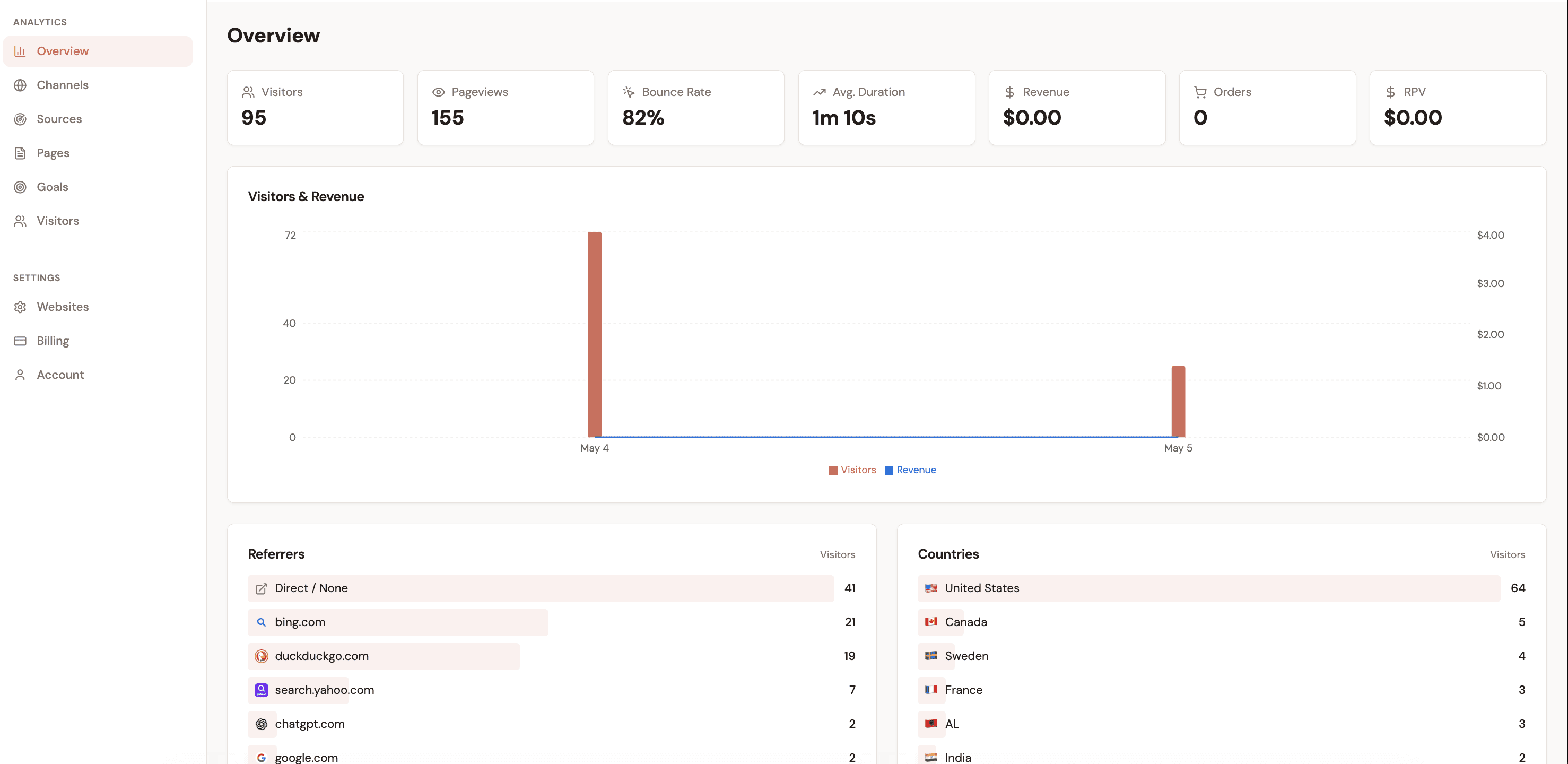
Typical traffic source distribution for indie SaaS

Source: Composite of OWOX, AdFixus, and indie founder dashboard analyses 2024–2025

See which channels drive your revenue

Connect Stripe and get a full revenue-by-channel attribution dashboard in 2 minutes. Cookie-free, no engineering required.

Start free trial →

Loved by 500+ users