Analytics Guide

Revenue per visitor by channel: benchmarks and how to calculate RPV

Vincent Ruan
Vincent RuanFounder, Attrifast ·

Traffic volume is a vanity metric. A channel that sends 10,000 visitors who never buy is worth less than a channel sending 400 visitors who convert at high value. Revenue per visitor (RPV) by marketing channel is the metric that reveals which channels actually make you money — and which ones just fill your analytics dashboard.

Updated March 2026 · 11 min read
TL;DR
  • RPV = Total Revenue from Channel / Total Visitors from Channel. It combines conversion rate and average order value into one comparable number.
  • 2026 benchmarks: Organic Search $4.20 RPV, Email $3.80, Paid Search $2.50, Direct $2.00, Social $1.20 — organic consistently outperforms paid on quality.
  • A SaaS founder spending $500/mo on Google Ads at $1.20 RPV while organic delivers $4.20 RPV should reallocate toward content — the data makes the case automatically.
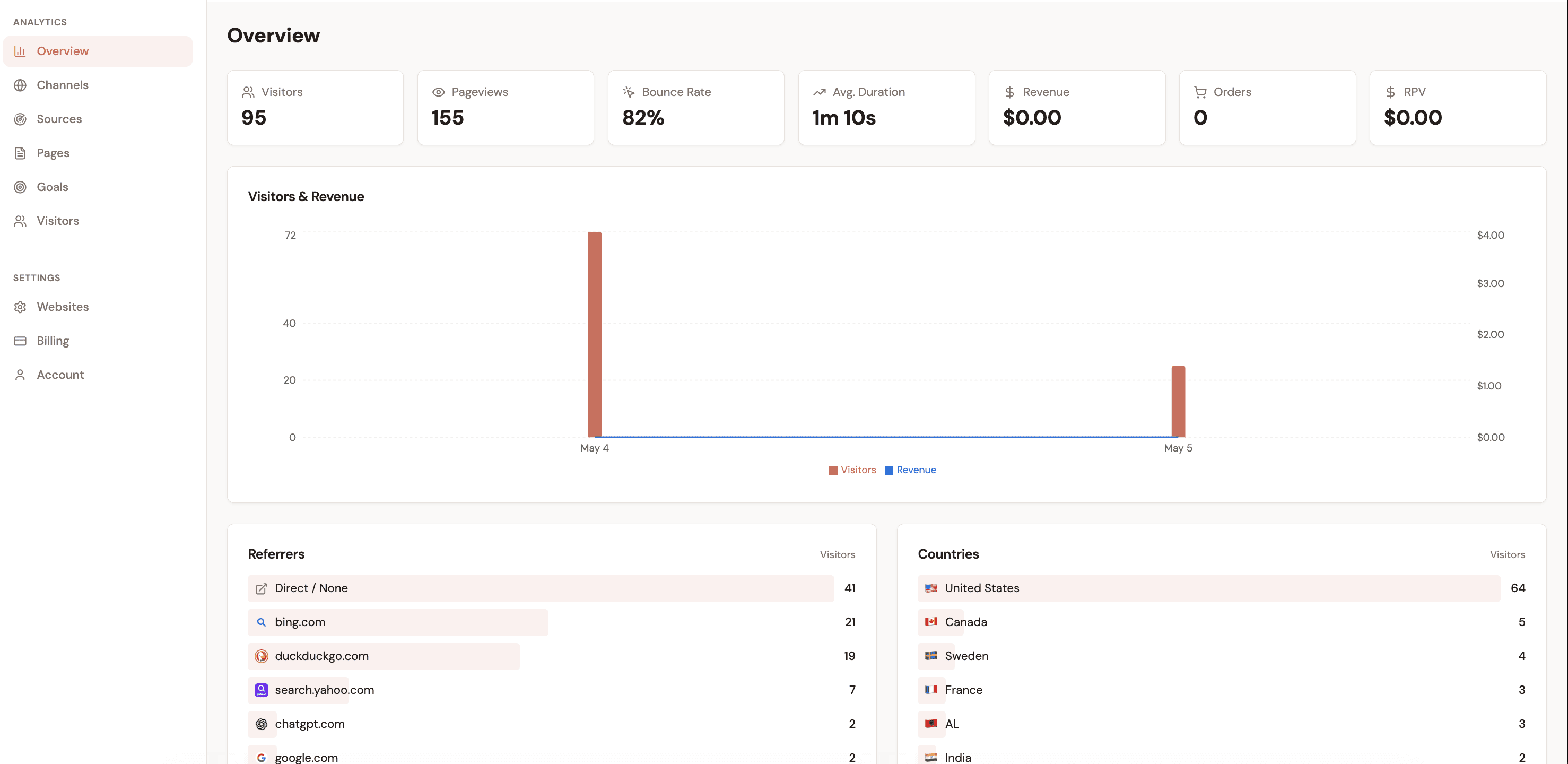
  • Calculating RPV manually is possible but fragile. Tools like Attrifast automate channel-to-revenue matching server-side, without cookies.

What is revenue per visitor by channel?

Revenue per visitor (RPV) measures how much revenue each visitor from a given marketing channel generates on average. It is a composite metric that captures both conversion rate and average transaction value in a single number, making it easy to compare the quality of traffic across channels with very different audience sizes.

The formula is straightforward: divide the total revenue attributed to a channel by the total number of visitors from that channel. The result tells you how much each incremental visitor from that channel is worth to your business.

The RPV Formula
Total Revenue (channel)Total Visitors (channel)=Revenue Per Visitor(RPV by channel)

Example: A channel drives 1,200 visitors and $5,040 in revenue. RPV = $5,040 / 1,200 = $4.20

RPV is more useful than conversion rate alone because it accounts for revenue magnitude. A channel with a 3% conversion rate on a $19 product has an RPV of $0.57. A channel with a 1% conversion rate on a $299 product has an RPV of $2.99. Optimizing for conversion rate alone would point you toward the wrong channel.

RPV is also more useful than average order value alone. A channel might have a high average order value but terrible conversion rates — its RPV will reflect the true combination. This makes RPV one of the most efficient single-number summaries of channel revenue quality.

RPV benchmarks by channel (2026)

The following benchmarks are compiled from ecommerce and SaaS revenue data reported by Klaviyo, First Page Sage, and Shopify merchant benchmarks. Treat them as directional — your actual numbers depend on product price, market, and conversion optimization.

Average RPV by marketing channel
Organic Search$4.20Email Marketing$3.80Direct$2.00Paid Search$2.50Social Media$1.20

Source: Compiled from Klaviyo, First Page Sage, and Shopify merchant data. Median values across SaaS and ecommerce verticals.

Organic Search — $4.20 RPV

Organic visitors are searching for solutions. High intent plus longer time-on-site leads to higher conversion rates and willingness to pay for higher-tier plans. Organic consistently tops RPV rankings across industries despite being a slower-build channel.

Email Marketing — $3.80 RPV

Email audiences are warm. They already know your product, which compresses the sales cycle and increases average order value. Segmented email campaigns for expansion revenue (upgrades, cross-sells) push email RPV even higher when measured correctly.

Paid Search — $2.50 RPV

Paid search captures high-intent clicks but at a cost premium that reduces effective ROI. Competition for commercial keywords has pushed CPCs up 40-60% since 2023, making paid search's RPV advantage over social narrower than it once was. Still outperforms social media significantly.

Direct — $2.00 RPV

Direct traffic is a mixed bag. It includes branded search, bookmarks, and dark social (links shared in apps that strip referrer data). The RPV variance within direct is high — some visitors are return customers, others are first-time visitors who typed the URL from a recommendation.

Social Media — $1.20 RPV

Social visitors are typically interruption-mode. They were scrolling when your content appeared, rather than actively searching for a solution. Lower purchase intent leads to lower conversion rates. Social excels at top-of-funnel awareness — but expect RPV to be significantly below search channels.

How to calculate RPV by channel (step by step)

Calculating RPV manually is possible. Here is the exact process, along with where things commonly break down and what you can do about it.

1

Export visitor counts by channel for a fixed period

Choose a 30 or 90-day window. From Google Analytics or your analytics tool, note the session count attributed to each channel: organic search, paid search, email, social, direct, referral. Use sessions, not users, to avoid undercounting return visitors.

2

Map each payment to its originating channel

This is the hard step. Pull your payment data from Stripe. For each payment, you need the marketing channel that drove the original visit. Without attribution tooling, this requires manually matching UTM parameters stored in your CRM or spreadsheet — error-prone and incomplete.

3

Sum total revenue attributed to each channel

Add up all payments (including subscription renewals if measuring LTV) originating from each channel. If a customer came from paid search and paid $299 for an annual plan, that $299 belongs to the paid search total.

4

Divide channel revenue by channel visitor count

Channel RPV = Total Revenue from Channel / Total Visitors from Channel. A channel that sent 1,200 visitors and generated $5,040 in revenue has an RPV of $4.20.

5

Rank channels and identify outliers

Sort from highest to lowest RPV. Your highest-RPV channel is bringing the most revenue per visitor — which usually means the audience intent is better matched to your offer, even if raw visitor volume is lower.

The problem with manual RPV calculation

Step 2 — matching payments to channels — is where manual calculations fall apart. GA4 only tracks payment events that fire in the browser. Stripe payments trigger server-side webhooks that GA4 never sees. Safari deletes cookies after 7 days (source: WebKit ITP 2.0). Ad blockers prevent GA4 from firing on 30-40% of sessions (source: Backlinko). The result is that manually calculated RPV using GA4 data typically undercounts organic and email revenue while inflating the proportion attributed to last-click paid channels.

Real-world scenario: when RPV data changes a budget decision

Consider a bootstrapped SaaS founder running a $500/month Google Ads campaign. Their blended analytics show 3,200 monthly visitors, 28 new trials, and $4,200 in new MRR. Those numbers look reasonable on the surface.

When they instrument channel-level revenue attribution and calculate RPV by source, a different picture emerges:

ChannelVisitorsRPV
Organic Search1,100$4.20
Email (newsletter)320$3.80
Google Ads1,400$1.20
Social Media380$0.90

What should the founder do?

The data makes the case clearly. Organic search delivers 3.5x the revenue per visitor of Google Ads, yet is likely receiving far less intentional investment. The founder has three rational moves: (1) pause or reduce Google Ads to $200/month and reallocate $300 into content production targeting organic search keywords, (2) double down on the email newsletter since its $3.80 RPV means each new subscriber is worth significantly more than a paid click, and (3) monitor RPV monthly to confirm whether the reallocation is improving blended revenue efficiency.

None of this decision is visible from traffic volume alone. The Google Ads campaign was sending the most visitors of any single channel — which would have made it look like the most important channel to anyone looking at a standard analytics dashboard.

RPV tracking: Spreadsheet vs GA4 vs Attrifast

Not all methods for calculating revenue per visitor are equally accurate or sustainable. Here is a direct comparison across the three most common approaches.

Automatic RPV calculation

Spreadsheet

Manual

GA4

Partial

Attrifast

Yes

Revenue connected to traffic source

Spreadsheet

Manual export

GA4

Breaks for Stripe

Attrifast

Yes — server-side

Works without cookies

Spreadsheet

N/A

GA4

No

Attrifast

Yes

Subscription revenue included

Spreadsheet

Manual

GA4

No

Attrifast

Yes

Setup time

Spreadsheet

4-8 hours/month

GA4

2-4 hours setup

Attrifast

2 minutes

Real-time RPV data

Spreadsheet

No

GA4

24-72 hr delay

Attrifast

Yes

RPV by UTM campaign

Spreadsheet

Very difficult

GA4

Partial

Attrifast

Yes

Why GA4 underreports channel revenue

GA4 runs in the browser and cannot observe Stripe webhook payments — which account for all subscription renewals and a significant portion of initial charges. It also fails to track conversions from visitors using ad blockers and loses attribution after 7 days on Safari. These gaps systematically undercount revenue from organic and email channels (longer consideration cycles) and overcount last-click paid channels. See our full breakdown in GA4 revenue attribution limitations.

How to improve revenue per visitor by channel

RPV is a diagnostic metric. Once you have it, the optimization strategies become clear. There are two levers: increase the revenue from converting visitors, or improve the quality of traffic from each channel.

1

Invest in channels with highest RPV

If organic search delivers $4.20 RPV and paid social delivers $1.20 RPV, marginal budget should go toward content and SEO before paid social. This seems obvious stated plainly — but without channel-level RPV data, most founders make the opposite decision because paid channels show faster short-term traffic gains.

2

Improve landing page-to-channel alignment

RPV from paid search is often lower than organic not because search intent is lower, but because paid search landing pages are generic. A visitor clicking on "project management for SaaS" should land on a page that speaks specifically to SaaS teams, not a generic homepage. Better landing page alignment increases conversion rate and average order value — both of which lift RPV.

3

Segment email campaigns by purchase signal

Email RPV is high on average, but it is even higher when campaigns are sent to segments showing purchase intent (viewed pricing, started trial, used a feature correlated with upgrading). Behavioral segmentation within your email list can push email RPV from $3.80 to $6+ for high-intent cohorts.

4

Monitor RPV shifts over time

A channel's RPV changes as your product, pricing, and competitive landscape evolve. Run a monthly RPV review. A sudden drop in organic RPV might indicate your converting content is ranking for informational keywords instead of commercial ones — a content strategy issue, not a product issue.

How Attrifast calculates RPV by channel automatically

Manual RPV calculation requires exporting data from at least two systems (analytics + payments), reconciling them by date, and rebuilding the table every month. Most founders do this once, find it painful, and revert to looking at blended traffic metrics.

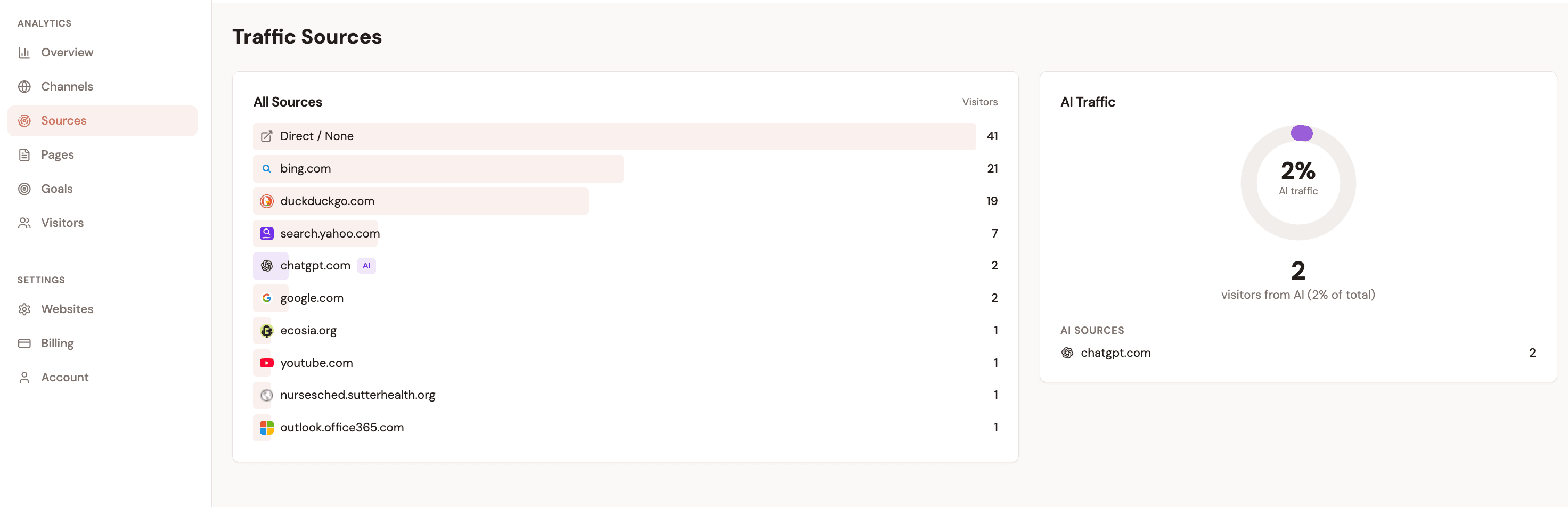
Attrifast automates the full pipeline. When a visitor arrives on your site, the lightweight tracker records their traffic source using a cookie-free, privacy-first approach. When that visitor later completes a Stripe payment — whether immediately or 30 days later, from the same device or a different one — Attrifast matches the payment to the original session server-side. The UTM parameters and channel data are preserved through the payment event, and RPV is calculated and updated in real time.

Works without browser cookies

Safari's ITP deletes cookies in 7 days. Attrifast uses server-side matching, so long consideration cycles — common in organic and email — are attributed correctly.

Captures Stripe subscription revenue

Webhook-based payment events are matched to the originating visit. Monthly renewals, upgrades, and downgrades all feed into the correct channel's revenue total.

No Google Analytics required

One script, two minutes to set up. You get channel-level RPV, CAC, and conversion data in a single dashboard without needing to configure GA4 custom dimensions.

Privacy-compliant by default

No personal data is stored. No consent banners required in most jurisdictions. Full GDPR and CCPA compliance without sacrificing attribution accuracy.

Frequently asked questions

What is revenue per visitor (RPV)?

Revenue per visitor (RPV) is the average revenue generated for every visitor to your site from a given channel. It is calculated as total revenue from a channel divided by the total number of visitors from that channel. RPV tells you which channels bring high-value traffic, not just high-volume traffic.

What is a good revenue per visitor benchmark?

RPV varies significantly by industry, product price, and sales cycle. For SaaS, organic search typically delivers $3-$6 RPV, email $2.50-$5, paid search $1.50-$3.50, and social $0.50-$2. Ecommerce benchmarks run lower. The most important benchmark is your own channel comparison — which channels outperform your average RPV.

Why is RPV a better metric than conversion rate for channel comparison?

Conversion rate does not account for order value or plan tier. A channel with a 3% conversion rate but $19 average order value produces less revenue per visitor than a channel with a 1% conversion rate and $299 average order value. RPV combines both conversion rate and average revenue into a single comparable number.

Why does organic search usually have the highest RPV?

Visitors from organic search are actively searching for a solution to a problem. They arrive with high intent and often spend time researching before converting. This leads to higher-value purchases and better retention compared to interruption-based channels like social media ads, where visitors are scrolling passively when they encounter the ad.

How does Attrifast calculate RPV by channel automatically?

Attrifast captures the traffic source when a visitor first arrives, then uses server-side matching to connect that visit to Stripe payments — including subscription renewals. Because attribution happens server-side without relying on browser cookies, it works even when visitors switch devices, use ad blockers, or take weeks to convert. The result is an accurate RPV figure for each channel updated in real time.

Should I use RPV or CAC to decide where to invest my marketing budget?

Use both together. RPV tells you how valuable a channel's traffic is. CAC tells you how much you spend to acquire customers from that channel. A channel with high RPV and low CAC is the ideal combination — it brings high-value customers cheaply. A channel with high RPV but very high CAC may still be profitable, but needs careful margin analysis.

Key takeaways

1Revenue per visitor (RPV) by channel is the most efficient single metric for comparing channel quality — it combines conversion rate and average order value into one number.
2Organic search consistently delivers the highest RPV ($4.20 industry average) because intent-matched visitors convert at higher rates and pay for higher-tier plans.
3Social media typically has the lowest RPV ($1.20) because interruption-mode discovery leads to lower purchase intent, even when volume is high.
4Manual RPV calculation is possible but breaks at the attribution step: GA4 cannot see Stripe webhook payments, and cookie limits cause misattribution for long-cycle conversions.
5A SaaS founder who discovers their Google Ads RPV is $1.20 while organic is $4.20 has a clear data-driven case for reallocating budget toward content.
6Recalculate RPV monthly. Channel performance shifts with seasonality, competition, and algorithm changes. Static RPV data leads to lagged decisions.

RPV by traffic source — indie SaaS benchmarks (USD)

Source: Composite of Shopify Plus 2026 CVR data, Stripe Billing analytics formulas, and indie founder dashboards

See your real revenue per visitor by channel

Connect Stripe and know exactly which channels bring high-value traffic — not just volume. Takes 2 minutes to set up.

Measure my channel RPV →

Loved by 500+ users